
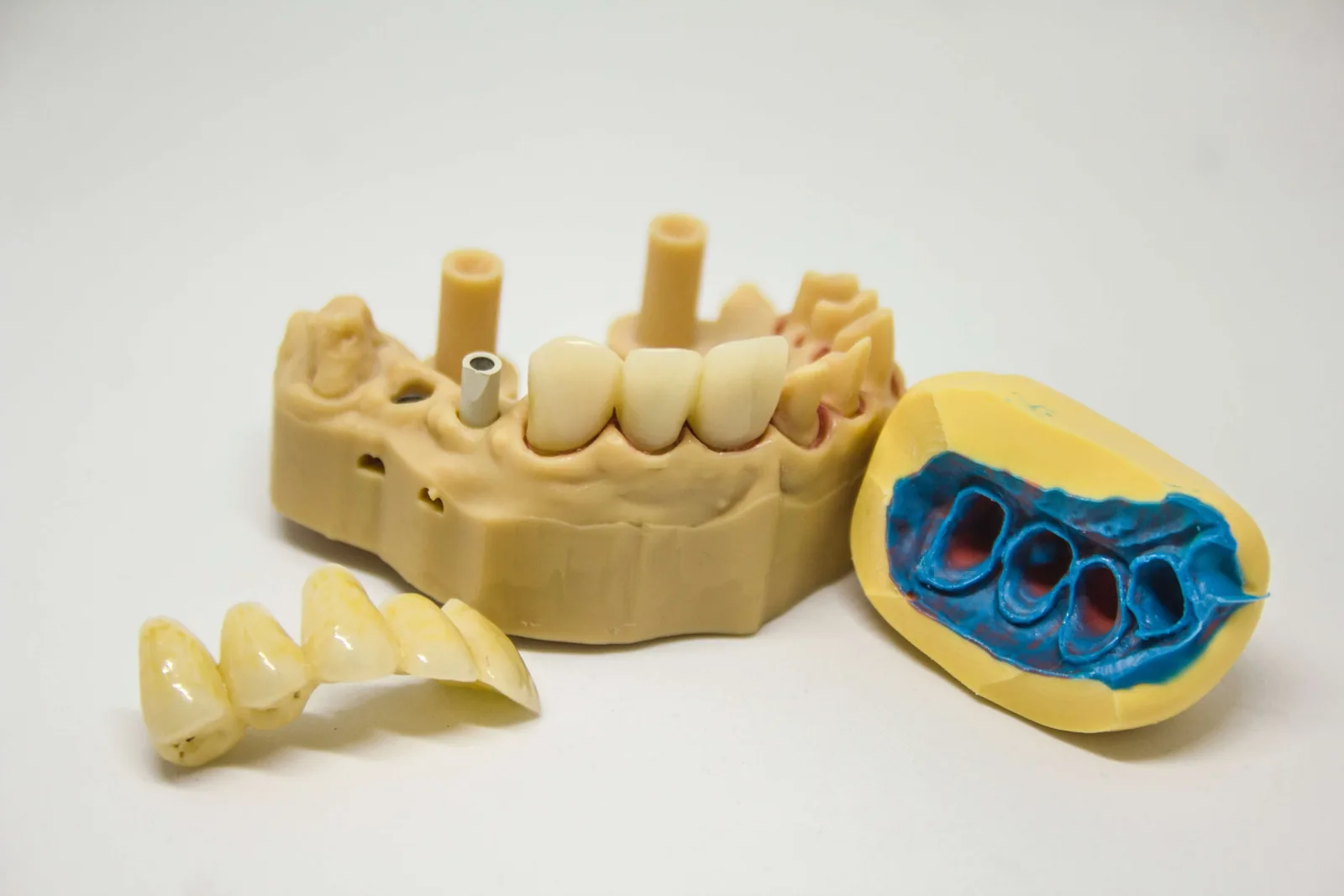
A dental crown is a cap shaped like a tooth. We fit it over your own tooth to cover it completely. A crown brings back the tooth’s shape, size, and strength, and it can also make it look better.
Once we cement the crown in place, it covers the whole part of the tooth you can see above the gum line.
Crowns can also form one part of a broader Hollywood smile plan when the examination shows they are appropriate.
Why Is a Dental Crown Needed?
You might need a crown if:
- Decay has made a tooth weak, and it could break.
- A tooth is cracked, and the crown holds the pieces together.
- A tooth is already broken or badly worn down.
- A large filling has left too little natural tooth behind to support it.
- You need a bridge, and the crown anchors it in place.
- A tooth is badly discolored and you want it to look better.
- You have a dental implant that needs a tooth-shaped cover.
- You want to change a tooth’s shape or color for cosmetic reasons.
What Types of Crowns Are Available?
Crowns come in a few materials: stainless steel, solid metal, porcelain fused to metal, all resin, or all ceramic. The right material depends on the tooth and your treatment plan. A firm figure is provided after an examination because the number of teeth, preparation complexity, laboratory work, selected material, and visit count can all change the treatment. Your consultation confirms the appropriate option and complete total.
What Steps Are Involved in Preparing a Tooth for a Crown?
Getting a crown usually takes two visits. At the first visit, we examine the tooth and shape it to fit the crown. At the second visit, we fit and cement the permanent crown in place.
What Problems Could Develop with a Dental Crown?
Discomfort or sensitivity. Right after the procedure, as the numbness wears off, the tooth may feel sensitive. If the tooth still has a nerve inside it, hot and cold food or drinks might feel uncomfortable for a while — toothpaste made for sensitive teeth can help. If it hurts when you bite down, the crown is probably sitting a little too high. Call us — this is a quick, easy fix.
Chipped crown. Porcelain crowns can chip. If the chip is small, we can smooth it over with a tooth-colored filling material without removing the crown — though this is usually a short-term fix. A bigger chip means the crown needs to be replaced.
Loose crown. Sometimes the cement holding a crown wears away. This lets the crown loosen, and bacteria can get underneath it and cause decay. If your crown ever feels loose, call us right away.
Crown falls off. Occasionally a crown falls off completely — usually because the tooth underneath has decayed, or the cement has given way. If this happens, clean the crown and the front of your tooth, then call us immediately. We’ll tell you how to protect the tooth until we can see you. You can hold the crown in place temporarily with a store-bought dental adhesive. Depending on what we find, we can often re-cement the same crown — otherwise we’ll make a new one.
Dark line at the gum. A thin dark line at the gum is common with porcelain-fused-to-metal crowns — it’s just the metal base showing through, and it isn’t a health problem. If you don’t like how it looks, we can replace the crown with an all-porcelain or all-ceramic one instead.
How Long Do Dental Crowns Last?
Most crowns last between five and fifteen years. How long yours lasts depends on daily wear, how well you keep up your oral hygiene, and habits that put extra strain on your teeth — grinding or clenching, chewing ice, biting your nails, or using your teeth to open packaging. Avoiding those habits helps your crown last longer.
Does a Crowned Tooth Require Special Care?
A crowned tooth doesn’t need any special routine — but it isn’t immune to decay or gum disease either. Keep brushing at least twice a day, flossing daily (especially where the crown meets the gum), and rinsing with an antibacterial mouthwash once a day.