Specialist care at our Giza and Sheikh Zayed clinics.
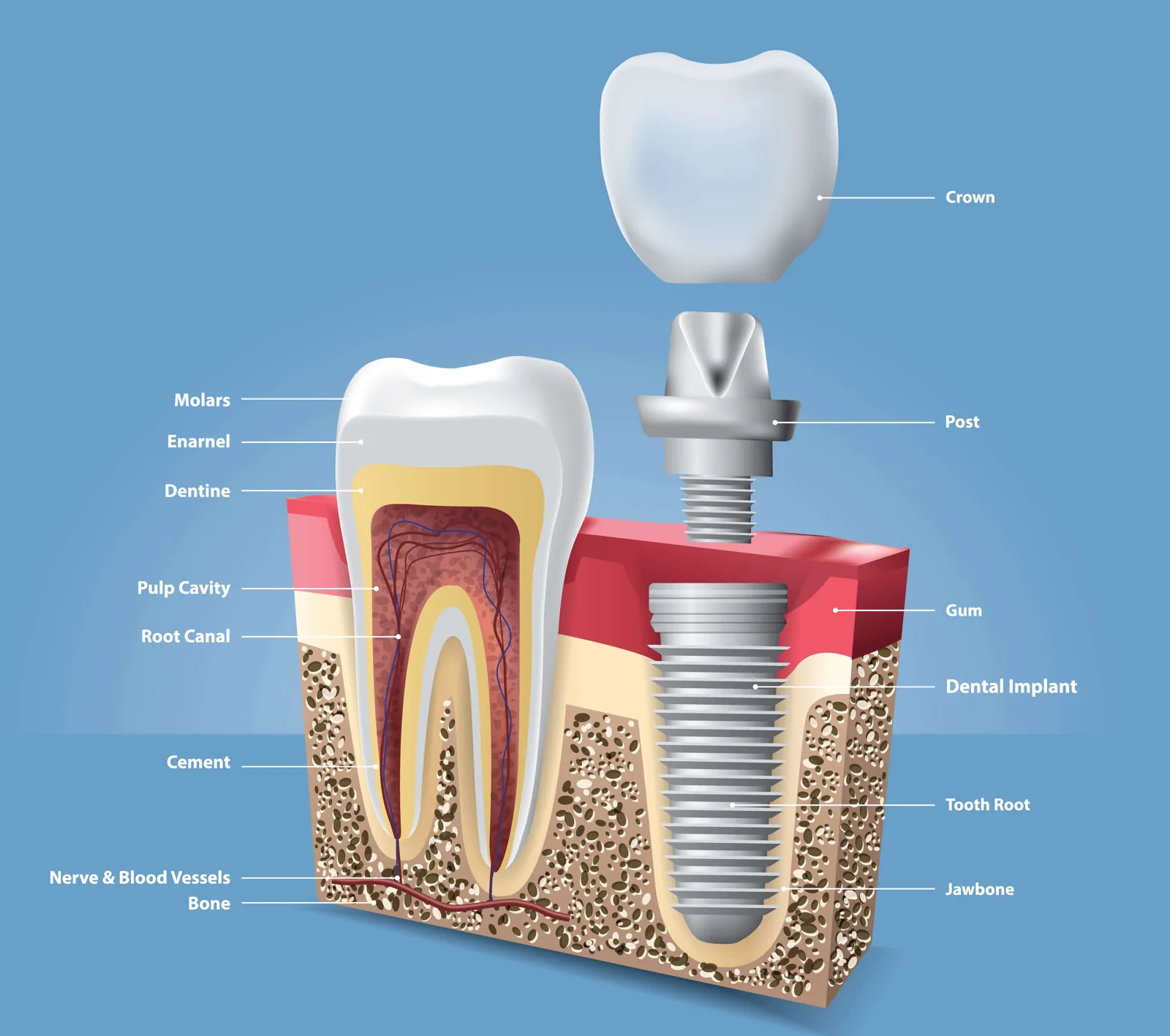
An implant replaces the root of a missing tooth. It gives a solid base for a replacement tooth — fixed in place or removable — made to match the rest of your smile. For a long time, bridges and dentures were the only options for a missing tooth. Today, there’s also the dental implant.
What Are Dental Implants?
What Are the Advantages of Dental Implants?
Improved appearance. Dental implants look and feel like your own teeth. And because they’re designed to fuse with bone, they become permanent.
Improved speech. With poor-fitting dentures, teeth can slip within the mouth and cause you to mumble or slur your words. Dental implants let you speak without worrying that teeth might slip.
Improved comfort. Because they become part of you, implants eliminate the discomfort of removable dentures.
Easier eating. Sliding dentures can make chewing difficult. Dental implants function like your own teeth, so you can eat your favorite foods with confidence and without pain.
Improved oral health. Dental implants don’t require reducing other teeth, as a tooth-supported bridge does. Because nearby teeth aren’t altered to support the implant, more of your own teeth stay intact, improving long-term oral health. Individual implants also allow easier access between teeth, improving oral hygiene.
Durability. With good care, an implant can last a lifetime.
How Successful Are Dental Implants?
How well an implant takes depends partly on where in the jaw it’s placed, but implants are a well-established, reliable treatment overall. With proper care, an implant can last a lifetime.
Can Anyone Get Dental Implants?
Most people healthy enough for a routine extraction or minor oral surgery are candidates for an implant. You’ll need healthy gums, enough jawbone to hold the implant, and a commitment to good oral hygiene and regular check-ups. If you smoke heavily, have an uncontrolled condition like diabetes or heart disease, or have had radiation therapy to the head or neck, we’ll need to assess your case individually.
How Painful Are Dental Implants?
Most patients say the procedure involves very little discomfort. We use local anesthesia during the surgery, and many patients report it’s less uncomfortable than having a tooth pulled. Afterward, any mild soreness usually responds well to over-the-counter pain medication.
How Do I Care for Dental Implants?
Care for an implant the same way you care for a natural tooth: brush, floss, rinse with an antibacterial mouthwash, and keep up your regular check-ups.
Frequently Asked Questions
What is a dental implant?
An implant replaces the root of a missing tooth. It gives a solid base for a replacement tooth — fixed in place or removable — made to match the rest of your smile. It's an alternative to a bridge or a denture.
What are the advantages of an implant over a bridge or denture?
An implant doesn't require reducing the teeth next to it, the way a bridge does, so more of your natural teeth stay intact. It also functions like your own tooth for eating and speaking, and doesn't carry the slipping or discomfort that can come with removable dentures.
Am I a candidate for a dental implant?
Most people healthy enough for a routine extraction or minor oral surgery are candidates. You'll need healthy gums and enough jawbone to hold the implant. If you smoke heavily, have an uncontrolled condition like diabetes, or have had radiation therapy to the head or neck, we'll assess your case individually.
Does getting a dental implant hurt?
We use local anesthesia during the procedure. Most patients say it involves very little discomfort — many describe it as less uncomfortable than having a tooth pulled. Afterward, any mild soreness usually responds well to over-the-counter pain medication.
How successful are dental implants?
Implants are a well-established, reliable treatment. How well one takes depends partly on where in the jaw it's placed, which is part of what we assess before recommending one.
How long does an implant last?
With good care — brushing, flossing, an antibacterial rinse, and regular check-ups — an implant can last a lifetime.
How long does the whole process take, from start to finish?
It varies by case — how much healing time is needed depends on your bone and gum health. We'll give you a realistic timeline for your specific situation at your consultation rather than a one-size-fits-all number.
How do I take care of an implant?
The same way you care for a natural tooth: brush twice a day, floss daily, rinse with an antibacterial mouthwash, and keep up your regular check-ups.
What happens if I just leave a missing tooth alone?
Neighboring teeth can gradually shift into the gap, and the jawbone under the missing tooth tends to lose density over time without something in its place. An implant, bridge, or denture all address this — which one fits your case is worth discussing at a visit.
How much does a dental implant cost?
A firm figure requires an implant consultation and examination. The treatment varies with the number of missing teeth, the implant and restoration materials selected, the condition of the jawbone and gums, whether preparatory work is needed, the complexity of placement, and the number of visits. After assessing those factors, the dentist can set out the recommended plan and confirm its total cost.