Dental service

Endodontic Treatment

Specialist care at our Giza and Sheikh Zayed clinics.

Endodontic Treatment treatment at Abul Makarem Dental Clinic

A root canal saves a tooth that’s badly decayed or infected. We remove the damaged nerve and pulp from inside the tooth, then clean and seal it. Left untreated, the infection can spread to the tissue around the tooth and form an abscess.

Once a tooth has come through the gum, its nerve isn’t essential to how it works day to day — the nerve’s only job at that point is to sense hot and cold. So removing it doesn’t change how the tooth functions.

Why Does Tooth Pulp Need to Be Removed?

When the pulp inside a tooth is damaged, it breaks down, and bacteria start multiplying inside it. That bacteria and decay can lead to an infection or an abscess.

What Damages a Tooth’s Nerve and Pulp in the First Place?

A few things can damage the nerve and pulp: deep decay, having several procedures done on the same tooth over time, a large filling, a crack or chip, or an injury to the face.

How Painful Is a Root Canal?

Root canals have a reputation for being painful, but most patients say it feels about the same as getting a filling.
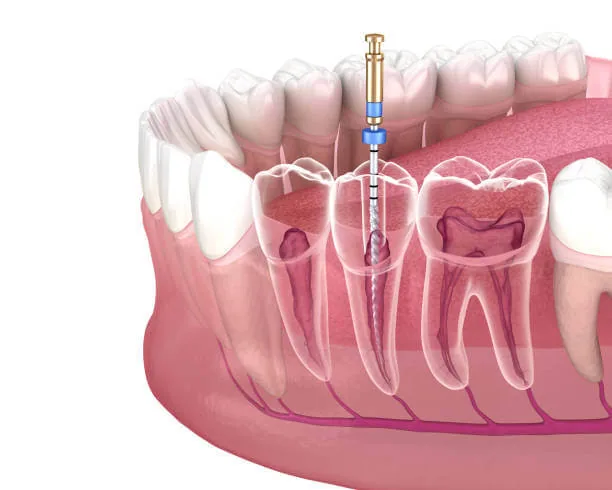
Dentist performing root canal treatment

What Should One Expect After the Root Canal?

For the first few days after treatment, the tooth may feel sensitive — this is normal inflammation, especially if there was pain or infection beforehand. Over-the-counter pain medication usually controls it well. Most patients are back to their normal routine the next day.

How Successful Are Root Canals?

Root canal treatment is a well-established, highly reliable way to save a tooth. Many teeth treated this way last a lifetime.

Since we finish a root canal with a crown or filling on top, no one can tell just by looking that you’ve had the procedure.

Alternatives to a Root Canal

Saving your natural tooth is always the best option when it’s possible — your own teeth let you eat the full range of foods you need for good nutrition. That’s why a root canal is usually the first choice.

The alternative is removing the tooth and replacing it with a bridge, an implant, or a removable partial denture — any of which restores chewing and stops neighboring teeth from shifting. These options usually cost more than a root canal, take longer, and can involve extra work on the teeth and tissue nearby.

Frequently Asked Questions

What is a root canal?

A root canal saves a tooth that's badly decayed or infected. We remove the damaged nerve and pulp from inside the tooth, then clean and seal it.

Why would I need a root canal?

A few things can damage the nerve and pulp inside a tooth: deep decay, several procedures done on the same tooth over time, a large filling, a crack or chip, or an injury to the face. Once damaged, the pulp breaks down and bacteria multiply inside it, which can lead to infection or an abscess.

Does a root canal hurt?

Root canals have a reputation for being painful, but most patients say it feels about the same as getting a filling.

What if I just have the tooth pulled instead?

Saving your natural tooth is usually the first choice when it's possible, since your own teeth let you eat the full range of foods you need. The alternative — removing the tooth and replacing it with a bridge, an implant, or a partial denture — usually costs more, takes longer, and can involve extra work on the tissue nearby.

Will I need a crown after a root canal?

Yes, typically. We finish a root canal with a crown or filling on top to protect the tooth — which is also why no one can tell just by looking that you've had the procedure.

What should I expect right after treatment?

The tooth may feel sensitive for the first few days — that's normal inflammation, especially if there was pain or infection beforehand. Over-the-counter pain medication usually controls it well, and most patients are back to their normal routine the next day.

Will removing the nerve affect how the tooth works?

No. Once a tooth has come through the gum, its nerve isn't essential to how it works day to day — its only remaining job is sensing hot and cold. Removing it doesn't change the tooth's function.

How reliable is root canal treatment?

It's a well-established, widely used way to save a tooth, and many teeth treated this way go on to last a long time with proper care.

What happens if I leave an infected tooth untreated?

The infection can spread to the tissue around the tooth and form an abscess. This is why we recommend not delaying treatment once a tooth is infected.

How much does a root canal cost?

A firm figure requires an examination and, when appropriate, diagnostic imaging. Root canal treatment varies with which tooth is affected, the number and shape of its canals, the extent of infection, the complexity of cleaning and sealing it, whether a crown or other restoration is needed, and the visit count. Your consultation provides a complete plan and confirmed total.